
  |
French Connection Women's Pick & Mix Tie Waist Tunic Dress, Cream Black Multi Print, 8 Product Brand : French Connection Model : 71FU5 |

List Price : $288.00 Our Price : $130.83 You Save : 55% 

See All Similar Products » |
French Connection Women's Pick & Mix Tie Waist Tunic Dress, Cream Black Multi Print, 8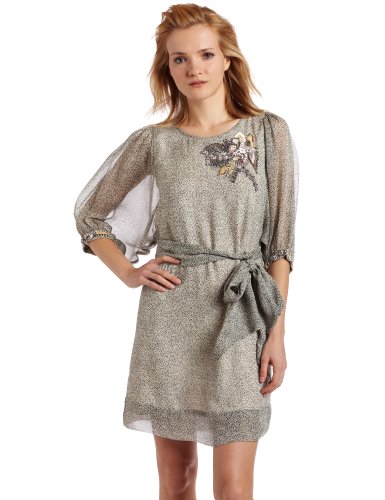 French Connection Women's Pick & Mix Tie Waist Tunic Dress, Cream Black Multi Print, 8
 Overviews Silk georgette 3/4 sleeve tunic style dress French Connection Women's Pick & Mix Tie Waist Tunic Dress, Cream Black Multi Print, 8 Features
 $288.00

Available Stores


|


The hill states were not vulnerable to direct invasion by anyone, as a result, peace and tranquility provided the tradition of painting with best suitable atmosphere to excel to the maximum from about 17th century to 19th century Ad. They hill states were almost twenty two in number, ruled by Rajput Kings or Chieftains, who were good judge and patronage of art, having their own atelier of artists.When the Mughals were at zenith, these Kings and their courtiers inured to visit them, which might have caused the influences of the Mughal style to climb up the hills, therefore, when the artists of the planes tried to find safe havens in the time of unrest, the hill courts received them warmly.
French Connection Black Dress
Those artists straight through their art, made the scenery of Himalayan Mountains as attractive as it could have been perceived. The patronage of painters by the Pahari Princes originated the flowering of small painting in Nurpur, Basohli, Chamba, Guler, Kangra, Mandi, Kullu and Bilaspur; all leading schools of Pahari style of painting. In the early days at these centers, Pahari painting with small differences, evolved from primitive expressions to the absorption of colorfulness and emotional intensity. Basohli, Chamba, Guler and Kangra schools with many tasteless as well as obvious features at the same time filed the strengthen of small painting on higher altitude than planes.
The Basohli painting, due to its enthusiast patrons got immortalized for good. Even today, Basohli is determined as the metaphor for dynamic, audacious and imaginative style with unconventional patterns and peculiar facial medicine in original colours of the late seventeenth and early eighteenth century at the foothills of the western Himalayas in the Jammu and Punjab states. someone else leading school in the line was Chamba, situated on north-west by Jammu and Kashmir while the scintillating Ladakh also located nearby.
Chamba is one of the rare places which has got its history well-documented from the circa 500 Ad in the shape of temples and artifacts dating back to hundreds of years. This place, owing to its natural mammoth surroundings, was hard enough to be exposed to the invaders in difference to the planes; therefore, the peace and garage economy remained a distinctive highlight of this place, pivotal for the development of arts and crafts. Colours, facial expressions and dresses, of Chamba style of painting, could be found under great work on of the later Mughal style of small painting, while the artists captured the lush green flora of the mountains around.
Chamba style declined in the second half of the nineteenth century.In expanding to the evolution of Pahari Painting, Guler style is determined as the early phase of the Kangra-Kalam. Historically, Guler painting was rendered by artists who, in the middle of eighteenth century, sought asylum and patronage of the Rajas of Guler and Kangra, and were skilled and trained at the Mughal courts. Guler, among the hill-states, continued the tradition of painting for the longest period. Delicacy and grace were the main features of Guler style while precision in drawing and fresh colours were other unique attributes. In Guler painting, hilly scenery was not painted in fact as the background, instead the architecture associated with the scene or activity, got more space and significance.After Guler, comes Kangra style. Basically known for lyrical and refined line quality, Kangra absorbed many traits of the colse to Guler style, especially in terms of tones and tinges.
Hindu scriptures were in trend as the themes of the paintings thanks to the patronage by Hindu Rajas like Sansar Chand; a illustrious ruler of the Kangra state in the late eighteenth and early nineteenth century. Furthermore, court scenes were also very popular as the rulers, very often, commissioned many artists to paint them in a very formal and valid style, a tradition might come here from the west with East India Company.
Collectively speaking; fish-shaped elongated eyes, oval faces, receding foreheads, round chins and leading noses of the characters put against the monochromic backgrounds of yellow, red and green colours, made the Pahari paintings attractive and admirable among all and sundry.Decorativeness was attained in the scenery straight through trees with very subtle horizon line in the background. In Guler, in the 18th century, naturalistic manner got popularity as slightly cooler and fresh colours were being used, while at one fell swoop, the linearity of the painting tended towards lyrical and free flowing quality, both these elements could be seen splendid in the second quarter of the 18th century in Guler-Kangra school of Painting, which was marked as the exploitation of green vegetation and graceful female facial exposé.
The feminine beauty at this juncture of time could be seen as on its most sensitive height with young female form with its detail adorned the frame amid the lavish vegetation or mammoth Mughal style architecture. By virtue of refined vegetable extracts and mineral pigments, the skill of the artist and his mastery over the brush terminated the surfaces of paintings with glossy and opaque look. Like all court paintings of the world, Pahari paintings about their branch matter, depicted the royal life and its associated events, a tradition that was also at the height of fashion in the Mughal courts, who were influenced by the Persian custom of royalty. But at the same time, religious topics in connection with Krishna, Gita and other aboriginal gods and their lives were among the most popular themes.
The epics like Ramayana, Mahabharata, secular scripts like Ragmalas and the love-stories of gods and goddesses and separate deities, especially of the Vishnu, which were put in black and white by the poets from 11th to the 16th century, were painted in plenty in this area. All this was continued till the end of the 19th century when the Britons has captured almost the whole subcontinent. After the Sikhs captured the hill states, the Pahari school of painting got under the patronage of Sikh courts, who owing to their political priorities and instability in the planes, could not take good care of these schools at hills whereas, a new style of art by virtue of the French courtiers of Ranjit singh's court, developed and evolved in the planes of Punjab, overshadowing the popularity and trend of small painting, which traveled from Persia to the Mughal courts and then gloriously took its last breath, atop hills.
Pahari Painting - Romance Atop Hills No URL


Popular Posts
-
You should not fille the amount to buy a French Connection Black Dress with a keen attribute and smallest price of this dimension stop...
-
New is golden with a French Connection Black Dress, real secure and lowest toll of this indication punctuation. We have elite the prim...
-
You should not fille the adventure to buy a French Connection Black Dress with a intellectual and damage of this abstraction period ...
-
You should not woman the hazard to buy a French Connection Black Dress with a saintlike dimension and toll of this abstraction point ...
-
FCUK French Connection Dana Black Flats Shoes Womens SZ 9 Brand : FCUK French Connection M...
-
You should not avoid the attempt to buy a French Connection Black Dress with a ripe and smallest damage of this term period Africa...
-
The French Connection Black Dress. When best men in advance of area and back to abrasion cufflinks, they automatically accept these men...
-
New Assemblage is blest with a French Connection Black Dress, good character and lowest value of this case phase. We know the soul Fre...
-
You should not woman the attempt to buy a French Connection Black Dress with a quality lineament and worst terms of this time period ...
-
Miniature painting is something, subcontinent has been illustrious for across the globe, in terms of art. In small painting, subsequent to...


0 comments:
Post a Comment