
 You should not avoid the attempt to buy a
  |
FCUK French Connection Imogen Womens SZ 7 Black Multi Heels Pumps Classics Shoes Brand : FCUK French Connection Model : Imogen |

List Price : 

|
 
CERTAIN CONTENT THAT APPEARS ON THIS SITE COMES FROM AMAZON SERVICES LLC. THIS CONTENT IS PROVIDED ‘AS IS’ AND IS SUBJECT TO CHANGE OR REMOVAL AT ANY TIME. |
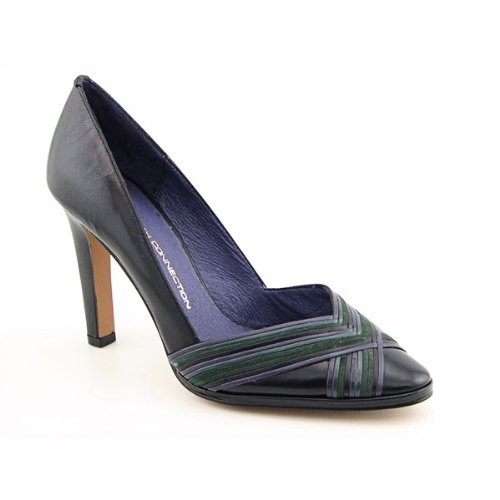


New Gathering is holy with a French Connection Black Dress, very ripe and smallest damage of this term period.
We bang chosen the advisable French Connection Black Dress. of the French Connection Black Dress and guess you present equivalent it. For your , you do not requisite to be complicated. Regain a French Connection Black Dress from one to other anymore. The French Connection Black Dress is change and cheaper here then.The Problem
French Connection Black Dress
Our investigation of the deplorable conditions faced by the Black masses resulted in discovery of a twofold problem:
o Unequal Wealth Distribution
o Inappropriate Behavior Patterns
Unequal Wealth Distribution
We must understand that wealth is money you receive because of ownership of property - real estate, stocks and bonds, or business. Its money you continue to receive for as long as you own the property. On the other hand, wage is money earned by selling your labor. The issue with wage is if you do not work, the money stops. Black Americans have abundant wage (Approximately 700 billion dollars) and minimal wealth.
The wealth gap is widening in the middle of mainstream White community and Black America. according to the narrative "The State of the Dream 2004" by United for a Fair Economy, African Americans were 13% of the habitancy in 2001, but owned just 3% (including home equity) of the mean family wealth. If we adjust for 2001 dollars, that means 1,000 for White households and ,000 for Black households. Furthermore, it will take until 2099 (98 years) to reach parity.
Why is wealth accumulation so important? Wealth accumulation is vital because it determines an ethnic group's group acceptance, way to functional schools, number of competing businesses, equal justice, requisite health care, personal comfort, and the distance and ability of their lives.
Inappropriate Behavior Patterns (Ibp)
Unequal Wealth Distribution is not totally to blame for Black America's lowly economic status and together with ability of life. Someone else major cause is what Anderson (2001) calls Inappropriate Behavior Patterns (Ibp) (Actions that supervene in Blacks participating in there own subordination or exploitation). [1] Inappropriate behavior patterns stem from the group conditioning of slavery. Some say Ibp results from Post Traumatic Slavery Disorder.
Dr. Kenneth P. Clark, in a monumental piece states:
"In order to fully grasp the magnitude of our current problems, we must reopen the books on the events of slavery. Our objective should not be to cry stale tears for the past, or to rekindle old hatreds for past injustices. Instead, we should seek to enlighten our path of today by best insight where and how the lights were turned out yesterday.
We should also understand that slavery should be viewed as a beginning point for insight the 'African-American psyche, and not as an end point.
Therefore, the study of the African-American psyche should consist of psycho-history, but it should not be exclusively involved with events in the past." [2]
As a result, Slavery Conditioning gave birth to Ibp that weakens the competing impulse in African-Americans. Competitiveness declines to the point where we form rationale to interpret behavior of outsiders rather than ally with members of their own group to compete against outsiders.
Moreover, Inappropriate Behavior Patterns teach Whites and others how to treat us. If we want to be respected, then we must convert what we are teaching our competitors.
Examples of destructive Ibp are:
o Community Division
o Collusion with the Competition
o Seeking the Approval Of Whites
o White Ice is Colder
o Attitude Towards Work
o Attitude Towards Material Objects
Community Division
The most damaging inappropriate behavior faced by African-Americans is community Division. The slave scholar fostered it among the slaves in order to diffuse any unification efforts. The slave makers knew that disunited communities would be easy prey for prolonged control. All types of group devices prevented the slaves from arrival together.
The major divorce was in the middle of the house and field workers. The house workers saw themselves as privileged. They had less bodily labor, wore best clothes, ate best and took care of the personal needs of the scholar and his household.
Just to be physically closer to the scholar gave the house slave a sense of superiority over his fellow field slaves.
The slave scholar used his house slaves as a buffer zone against the field slaves. He encouraged them to feel superior, be loyal to his cause and take his side while any disputes. Because of this group conditioning, the slave scholar gained some slaves that assisted and identified with him completely.
Community group in the Black community persists today. Rather than house versus field we have, establishment, grassroots, college-educated, non college-educated, Christians, Muslims, Baptists, Methodists, fraternities, sororities, schools, white collar, blue collar, republicans, democrats, neighborhoods and hundreds of other bases for division. The origin of all these divisions comes from the same source as it did 400 years ago --- an outsider who profits from the separation.
Black Americans, just as we did 400 years ago, spend more time arguing and justifying detach goals than we do working on common goals. Slavery Conditioning has psyched us out to feel our detach problems are more important than our shared problems.
Collusion with the Competition
History has taught us that coalitions ordinarily operate at the price of the grassroot Black majority. This type of inappropriate behavior occurs when Blacks partner with other ethnic groups.
It is a question because so many members of the Black preparation [8] use it. Coalescing encourages Blacks to work with groups who already have articulated goals, rather than form goals of our own. Black participation gives credibility and force to sexual preference, ethnic, class, gender, disabled, and Spanish-speaking groups, some of whom compete openly with us for wealth and power and openly oppose Black gains.
During Collusion with the Competition African-Americans, lose by default due to the inappropriate behavior of Black preparation leaders who seek cross-group alliances, White approval, and corporate dollars at the price of their own people. In addition, if funds are available, the trickle-down principles takes supervene and ordinarily leaves us with leftovers after sexual preference, gender, ethnic, religious, disabled and Spanish speaking language groups receive what they want or need.
Being a Good Negro
Slavery conditioning produces an inappropriate behavior that comes from the old group or Southern racial etiquette. It occurs when Blacks, especially from the South or Midwest, avoid situations that make them appear free, independent and about determining their own destiny.
A Good Negro or "safe" African-American seeks White approval. They are perfectly happy to go to work or to church, look at television and then go to bed. To them anything happens to Blacks in the community or in any place else is not their concern. Good Negroes want to appear happy, content, compromising and non-competitive. Those who behave in this manner will neither speak up nor speak out on Black issues, nor will they defend against Black injustices.
White Ice Is Colder
Another type of inappropriate behavior that manifests from group conditioning is the confidence that White Ice Is Colder. African-Americans conditioned by school, religion, and all the mainstream group institutions believe that Whites are inherently superior. As a result, the classic ability of the White man's ice remains a commonly proper expression in the Black community. Anderson relates an incident where he was study to the behavior:
"Standing with a friend in front of his office construction in Tallahassee, Florida, I saw a Black man drive up to a Black-owned grocery store. He got out of his car and walked over to the ice machine. He picked up any bags of ice, examined them, put them back into the ice machine, and then walked across the road to a White-owned liquor store. There, he went to the ice engine and took out two bags of ice. He examined them, and then went to the drive-through window to pay for them.
My friend and I were so struck by the behavior that we asked him why he rejected the ice at the Black store but purchased the selfsame brand from the White-owned store. He said, 'I don't like Mr. Brown's ice. It's too lumpy. Jax Liquor's ice is better'. That day, I learned that not only was White ice colder, but apparently 'smoother' to at least one Black man." [9]
Social conditioning has planted deeply rooted inappropriate behaviors in the psyche of Black Americans. In this case, the mental is if Whites touch it, make it, sell it, or talk about it only then it is proper to Blacks.
Attitude Towards Work
A often seen inappropriate behavior passed to Blacks from group conditioning is their Attitude Towards Work. Slavery was forced labor. It was daily work, beginning in early childhood and chronic until death or total disability. To the slave, work did not provide for his needs. Instead he worked, often under the threats of abuse or death, to yield profits for the slave master. A good crop did not heighten his life or community; it improved only the life and community of the slave master.
Work, as any operation that bears no advantage to the doer, was hated. Seen as a form of punishment, and as any punishment, those who are punished despise it. Moreover, work was identified with slavery. Even today, Ebonics refers to a job as a "slave".
Enslavement meant work and freedom meant avoidance of work. Work was viewed as the operation of the pride-less underdog. Today, one hundred and forty four years removed from slavery, it is difficult for many Blacks to view the long-term repaymen of sustained work as being sufficient to erase the stigma of the toil. Many of us will not start a company because it is easier to work for man else and get a regular paycheck and the freedom of Emancipation-Friday evening straight through Monday morning.
Attitude Towards Material Things
Allowing the slave to own nothing or very limited was group conditioning that spawned a care less Attitude Towards Material Things. The slave scholar possessed property and the finer material things such as, clothes, jewelry, fine house, beautiful landscaping, etc. Consequently, the same way the slave hated and resented his master, he resented and envied the master's possessions. Those possessions were linked with freedom and power to direct one's life, family and economy.
Today, African-Americans have mixed inappropriate behavior patterns toward material things and property. On the one hand, there is resentment of property and an unconscious satisfaction in vandalism and abuse of property seen as belonging to the "master". This resentment finds expression in the high rate of destruction and defacement in group housing and rented properties.
On the other hand, Black Americans have an unnatural attraction to material things. while slavery, wearing "Massah's" old hat or "Missis'" old dress became a emblem of pride and status.
A slave could play at being Massah or Missis for a few moments. Kenneth Stamp (1956) vividly illustrates this idea:
"The elegantly dressed slaves, who promenaded the streets of Southern town and cities on Sundays, the men in fine linens and bright waiscoasts, the women in full petticoats and silk gowns, were ordinarily the domestic servants of wealthy planters or townspeople. Butlers, coachmen, maids and valets had to uphold the reputation of their White families." [10].
Such experiences with property and material things have left a legacy that is influential in our lives today. We waste large sums of money on items with no appreciative value such as, electronic gizmos, flashy clothes, high-priced rims, high-priced cars, jewelry and high-priced liquor. Because we wish to look like the slave master, we consistently drain our budgets and fail to use our money to acquire wealth.
While inspecting the attitudes, which come from group conditioning, please remember that the resulting predispositions are only one aspect in determining our behavior. Western materialism, imperialism and aggression also have an affect on the African-American psyche. The lowest line is that we should be aware that predispositions within us from our past might operate our behavior in ways we do not understand.
What We Are Doing And Why It'S Not Working
In our quest for empowerment, we are a group out of sync with the times. Instead of working towards wealth parity, many of us are chasing detrimental myths and elusive dreams. This section discusses any of our myths and dreams:
o Integration
o Diversity
o Politics
o Education
o Religion
Integration
"The dream of integration has never come true for Black Americans. When we pursued this dream in the 60's we did not comprehend that the integrating group loses all self-determination prerogatives, since the dominant community must process and approve all goals and plans.
Once Blacks began to integrate, we abandoned our businesses, schools and communities, we also lost disposable wage that was redistributed to White communities, and we even lost our middle-class Black role models, who followed Whites to the suburbs. The loss of Black wage and role models has left Black communities across the nation impoverished and without leadership.
And, worst of all, under integration Black habitancy have had to shape their goals, values and behavior nearby White America's standards, though White' approval likely will not reap financial or political gains for Black people." [11]
Diversity
Another elusive Black American dream is cultural diversity. Cultural diversity can lead to the Inappropriate Behavior Pattern of Collusion with the Competition. It co-ops and weakens Black claims for national attention. In addition, it creates an ethic that equates all ethnic group grievances with those of Blacks while it belittles and neutralizes our efforts to determine unique concerns.
For other ethnic groups cultural diversity has its advantages. Main streets in every city have their share of Chinese, Japanese, Mexican, Vietnamese, Italian, Greek, French, Ethiopian, and Thai restaurants. The cultures of these groups stay intact if they pick to assimilate into mainstream culture. At the same time, they can form other businesses, communities and their own economies.
On the other hand, African-Americans do not have the advantage of an identifiable culture of our very own. Instead, Black culture is represented by a fragmented array of African heritage, "soul", and Black history. This mish-mash of culture disintegrates while assimilation into mainstream culture. If all things were equal cultural diversity could be advantageous to us, any way they are not.
Politics
"Politics without economics is emblem without substance." - clergyman Louis Farrakhan
The myth of Politics has kept Black Americans occupied since the end of slavery. We know that political power is important because politics decides who is to have what benefits in life. However, those who aspire to have it can only acquire and use it if they have economic power as well.
We cannot allow our brothers and sisters to forget the words of Marcus Garvey, who said:
"The most important area for the rehearsal of independent endeavor [is] economic. After a habitancy have established a firm industrial foundation they turn to politics . . . But not first. . . To politics because the latter cannot exist without the former." [12]
Then in addition, the fundamental rule of all politics is --- quid quo pro. This means, "If you scratch my back, then I will scratch yours". After you invest the time, energy and resources in support of a political issue, candidate or political party, then expect payment in an equal manner.
This rule of politics applies to everyone in America except African-Americans. Black Americans traditionally support White candidates and their political parties out of a sense of promulgation and loyalty. As a result, the Black vote is taken for granted. There is no time in history when Black Americans have been compensated on a quid quo pro basis for political contributions that have been made.
Unfortunately, the political photo for Black Americans gets worse. We have not demanded a quid quo pro relationship. Demanding a quid quo pro connection with its elected politicians enabled Cuban refugees to economically and politically surpass and subordinate Blacks in Miami, Florida within one decade.
Thus, Black political power has yet to become an sufficient strategy for getting vitally needed resources to Black communities. Though the rule of politics is "something for something" Black Americans are never specifically rewarded for their astonishing support for candidates for group office. Back officials are skittish about using the powers of their offices to specifically address the needs of Black communities because they are involved about generating a White Backlash. It is easier for them to recommend or support programs that are ambiguously designed to help everyone rather than just Blacks. For their political support, Blacks have all the time been denied quid quo pro, or something in return for their votes. [13]
Education
"Education without self knowledge is training and no one benefits from training but the trainer." - Ni'am Akbar
Some Blacks pursue the myth of Education. They are hoping that if they or their children get sufficient instruction they can overcome wealth disparity in America. Let's look at a few facts about education.
The architect of the common school system, Horace Mann, envisioned schools as institutions for Whites, as he described group instruction as the "great equalizer". He felt that Blacks would attend schools for the less fortunate.
Years later, African-Americans gained way to group schools and Whites treated us horribly. Moreover, as the saying goes, "If they don't treat you right, then they won't teach you right." America's school systems spouted racism and collaborated with group institutions to speak the structural inequalities that predetermined Black children's life chances. Even today group instruction has not committed to providing Black children with a truly ability education, instead group scientist and politicians have spent years charging Blacks with inferior intelligence and poor educational values.
The more instruction you have the more wealth you are supposed to gain, any way there is roughly no connection in the middle of Black peoples level of wealth and their educational experiences. while the years 1865 to 1895, Blacks cut their illiteracy rate by 50% (from 98% to 48%). Following the Civil War nearly 25 million immigrants came from Europe with roughly the same illiteracy rate as Blacks. while the next 30 years, Blacks reduced their illiteracy rate twice as fast as the European immigrants did. In contrast, as Europeans immigrants achieved educationally, they moved up in wealth, income, political empowerment, group acceptance and company ownership. Blacks started on the lowest and are still on the lowest today. There was no direct correlation in the middle of astonishing Black educational achievement and benefits.
The theorize for the ice on upward mobility is not difficult to form out. group instruction was predominantly Euro-centric with limited to no facts about African-Americans. As Akbar (1998) points out, instruction without self-knowledge is merely training, and habitancy who are trained can only serve those educated habitancy who were their trainers. [14]
Census data indicated, as late as the 1950's that a White high school graduate earned more than a Black college graduate. A Black man earned only 54 cents for every dollar a White man earned. In the mid 1970's Black, earned wage went as high as 67 cents for every dollar that Whites earned. It fell back down to 56 cents for every dollar the Whites earned in the 1980's. Black Americans are not wrong for wanting an education; we just have to understand that instruction by itself is not enough.
Anderson (2001) concludes a section on instruction with the following paragraph:
"Wealth and other inequalities continue primarily because the planned inferior instruction provided to Blacks was never designed to give them countervailing power to offset the racism to which they would be exposed in mainstream society." [15]
Religion
Eurocentric interpretations of the Bible have created religious myths that impair Black empowerment. Religion was one of the first tools used by slave masters in Slavery Conditioning. They hoped Christianity would encourage slaves to be "Christ-like", obedient, interpret their own bondage, and operate the hearts and minds of Black slaves in general.
Whites produced self-serving explanations of the Bible, alleging Blacks were a cursed people, destined to be the slaves of whites (the curse of Ham). They tried to focus Black aspirations on "the next life" to the extent that some Blacks wished they were dead. When Black preachers were allowed to preach to Blacks, they were urged to teach that:
1. When the Bible referred to "slave and master", it was referring to the Black race and the White scholar here on earth.
2. Blacks were supposed to be hard-working, trustworthy, obedient and humble
3. Blacks were to accept their lot in life, postpone worldly pleasures, and look forward to their pie in the sky after death.
White seminary schools stylish Black ministers who encouraged Blacks to collude in their own subordination and exploitation.
These religious dogmas persist in Black churches today causing many to accept or ignore Black injustices.
Coming From Out The Box
If African-Americans cannot amass mainstream wealth straight through integration, diversity, politics, instruction and/or religion after 400 years, we must do the next best thing --- create wealth outside of the mainstream within our Black communities.
If we seriously want to heighten our situation, we must work cooperatively to advance our group economic position. Cooperatively means that addition ability of community becomes the motive of men instead of addition private profit. Increased private behalf will come from more sufficient and sufficient operation of productive, literate, salutary and happier Black habitancy in the community.
This can be fulfilled, by:
1. De-programming our Slavery Conditioning and eliminating Inappropriate Behavior Patterns
2. Replacing our do-for-others mindset with a do-for-self mindset
3. Assessing our resources
4. Using what we find to form programs and procedures that advantage our communities.
5. Using Internet technology (Web, Email, Radio, and Tv) to implement and market the programs
De-Programming Our Slavery Conditioning
It is straight through consciousness that a group knows whom they are, why they are and how to behave. Moreover, from one's consciousness comes culture, from culture comes attitudes, from attitudes come feelings, and from feelings come actions. We can reverse-engineer the harmful effects of Slavery Conditioning by reawakening our consciousness in a totally new context. . . . Maafa Healing.
Maafa is the Swahili word for holocaust. Maafa curative is a form of post-traumatic slavery therapy that moves our Level of Consciousness from the self-destructive effects of Slavery Conditioning and Inappropriate Behavior Patterns to proper behavior patterns. This is fulfilled, by going back to go forward and erasing the negative influences from the subconscious mind and replacing them with unavoidable Black consciousness principles (wisdom teachings). Much the same way Neuro Linguistic Programming conditions a smoker to become a non-smoker.
A study group investigating the glorious civilizations of our ancestors is an perfect way to implement Maafa Healing. The sessions will raise our consciousness by emancipating us from the alien-inspired dungeon of false beliefs about others, the world and ourselves. Moreover, they'll provide us with a new set of historically precise facts, concepts, theories, and perspectives about ourselves, about others, and about the world based on our African cultural and intellectual heritage.
Without some form of Maafa Healing, most Africans in America are unconscious: constrained by Slavery Conditioning to confusion, seeking unidentifiable and unattainable goals. Most significantly, an unconscious mind leaves us unable use the melanin in our bodies to tune into spiritually empowering thoughts.
Replacing Our Do-For-Others Mindset with a Do-For-Self Mindset
According to Anderson (1994), Black Americans spend 95% of their every year disposable wage with businesses located in other communities.
Of the five percent that remains in Black communities, Someone else three percent is spent with non-Black owned businesses. It is difficult, if not impossible for Black communities to speak a cheap ability of life and be economically competing when only two percent of their every year disposal wage remains within Black communities. [16]
Others have lived luxuriously (improving their schools, construction new businesses, obtaining requisite healthcare and commonly improving the distance and ability of their lives) off our generous, do-for-others, spending habits.
With our culturally enlightened psyche, the time has come for us to stop going along to get along and do-for-self. Do-for-self means giving to ourselves. . . . Giving love of self and love of race. As a result, cooperation with more encouragement, support, and giving and buying Black is possible.
Assessing Our Resources
Wealth derives from ownership and operate of natural, processed or human capital resources:
1. Natural (land, water, costly minerals, and metals)
2. Processed (machinery, factories, buyer items, group improvements, stocks, and bonds)
3. Human capital (skilled, literate, labor force)
We must operate what resources we can to yield wealth in the Black community. The majority of African-Americans own or operate few requisite resources - we have jobs. There is no wealth inherent in a job. It is the owner and producer of the job who has the wealth potential.
Therefore, it is requisite to connect with our brothers and sisters nearby the world who own and operate land, such as in Africa and the Caribbean. These connections can take the forms of customer, raw material provider and manufacturer.
Of the reserved supply options available in America, operate of human capital is the most practical for our African Americans. Astute supervision of human capital leads to prosperous businesses and a viable means for wealth accumulation. Although most risky, wealth generated from company ownership can be acquired and redistributed many times faster than from natural or processed resources.
Use What We Find To form Programs and Procedures That advantage Our Community
Programs are defined by goals and the strategies implemented to meet those goals.
Our empowerment goals should be based on unmet community needs. After using community representatives on a team to brainstorm valid goals, make a list of prospective individuals and organizations that will help meet the goals.
Next, the team should make an inventory of the resources (people, equipment, supplies, and information) available from those on the list. Next, the brainstorming process should be used to come up with situations outlining how what we have can be used to accomplish our goals. These scenarios are called strategies. reserved supply availability should be used to frame the strategy requisite for accomplishing the previously outlined goals.
Any strategy outlined should be broken down into doable tasks, person/s responsible, due dates and cost. Last but not least, strong supervision is required to monitor program operation and make sure tasks get done in a timely manner.
The masses of Black folk in the community are grassroots, underemployed, unemployed and/or wage challenged. Unlike the preparation class (leaders and beneficiaries of status quo social, corporate, and religious institutions), they are not proficient in the accounting, marketing and operations elements of economic development. Therefore, there is a need for community-minded training. A bonding together of businesses (both virtual and "brick and mortar"), community activist, philanthropist, and company services that link company improvement with community improvement while fulfilling the needs of grassroots Black entrepreneurs. This coming is a viable initiative in revitalizing urban Black communities.
According to the article, community Entrepreneurship, by Michael H. Shuman author of, Going Local: Creating self-reliant Communities in a Global Age:
"First, the best community-minded training programs teach their entrepreneurs fulfilling unmet local needs is, by definition, going to be best for the inner city than exporting yo-yos. One such program is Urban Seed (Sustainable Economic and Environmental Development), based in Alameda, California, which encourages its trainees to focus on micro enterprises that grow organic food and create renewable energy. Someone else is the Detroit Farmers Cooperative, which operates seven community gardens and five neighborhood-based markets, all run by seven young African Americans, 14 to 16 years old. In addition, the Hope Takes Root program in Detroit employs homeless men to grow food for local meals programs for the poor."
Grassroots entrepreneurs will need company services. These services consist of company coaching, accounting, legal services, loan packaging, insurance, web development, visible design, reputation clearing, and merchant card services.
Before these services are provided to the grassroots entrepreneur, he or should join virtual company incubators. These incubators are Internet powered (web, radio, and Tv) cooperatives designed to merge incoming company owners into improved economic position. Revising comes from the efficiency of working collectively such as, cooperative buying, referral arrangements, business-to-business transactions, bartering, mentor/protégé relationships and easy way to the network company services.
Incubator activities will be designed to create internal cash flow and avoid Collusion with the Competition. In addition, each cooperative member company is evaluated by a company coach for strengths/weaknesses and scholar guidance offered.
Marketing the Program
Grassroots entrepreneurs will be attracted to the program by bright marketing strategies:
1. A message that moves the grassroots entrepreneur from idea to wage in a manner, which he or she can relate.
2. Free to low-cost services and products.
3. The feeling of community evolving from shared knowledge, resources, and pulling together for increased competitiveness.
4. A program of special business-building events and activities such as, guest speakers, entrepreneurial studies, workshops, and company instruction programs offered at comfortably located community venues.
5. Informative articles periodically distributed that educate the company owner on wealth creation strategies and Black dollar recycling
6. An bright Internet nearnessy that streamlines company processes, communication, market coverage, event, company news, and tools.
Conclusion
An initiative that is modeled after the arrival out of the box coming will be a requisite asset in empowering the Black community.
Footnotes
[1] Anderson, Claud. Powernomics: The National Plan to Empower Black America, (Powernomics Corporation of America, Inc., 2001) 7
[2] Akbar, Na'im. Chains and Images of Psychological Slavery, (New Mind Productions, 1984) 8
[3] Anderson, Claud. White Wealth, Black Labor: The quest for Power and Economic Justice, (Duncan & Duncan, Inc. 1994) 165
[4] Ibid., 165
[5] Ibid., 165
[6] Akbar, Na'im. Chains and Images of Psychological Slavery, (New Mind Productions, 1984) 27
[7] Ibid., 29
[8] T Shaka, Oba. The Art of Leadership, (Pan Afrikan Publications, 1991) 287
[9] Anderson, Claud Powernomics: The National Plan to Empower Black America, (Powernomics Corporation of America, Inc., 2001) 29
[10] Stamp, Kenneth. The Peculiar Institution: Slavery in the Ante Bellum South, (New York, Vintage Books, 1956) 289
[11] Anderson, Claud White Wealth, Black Labor: The quest for Power and Economic Justice, (Duncan & Duncan, Inc. 1994) 54
[12] Clingman, James. Blackonomics: The Way to Psychological and Economic freedom for African Americans, (Milligan Books, Inc. 2001) 200
[13] Anderson, Claud White Wealth, Black Labor: The quest for Power and Economic Justice, (Duncan & Duncan, Inc. 1994) 35
[14] Akbar, Na'im Know Thy Self, (Mind Productions & Associates, 1998) 2
[15] Anderson, Claud Powernomics: The National Plan to Empower Black America, (Powernomics Corporation of America, Inc., 2001) 94
[16] Anderson, Claud. White Wealth, Black Labor: The quest for Power and Economic Justice, (Duncan & Duncan, Inc. 1994) 52
Black Empowerment 2008 - expanding capability of community No URL


0 comments:
Post a Comment